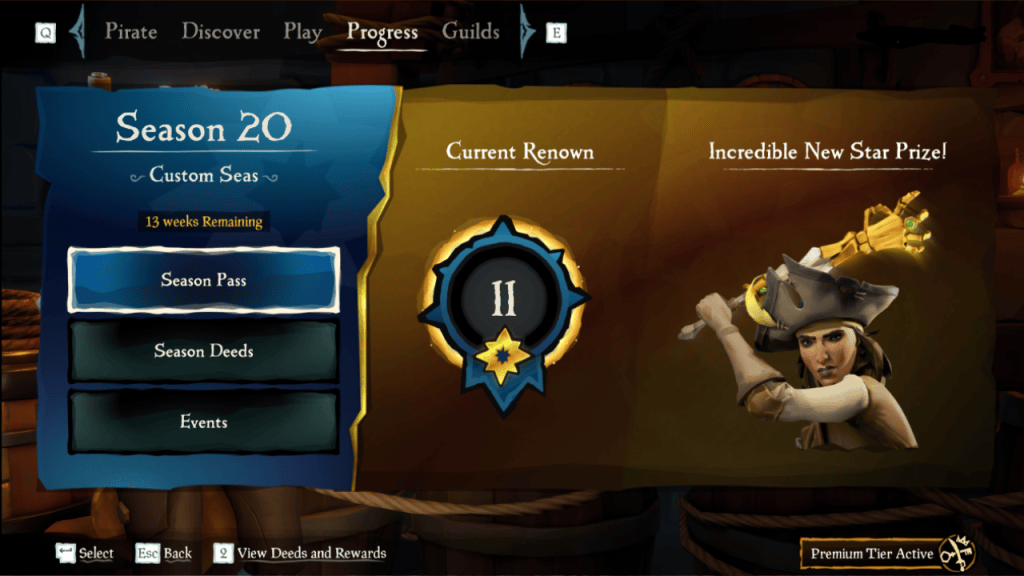
The reworked Season Pass: current Renown, the new Star Prize, and easier access to Events and Deeds.
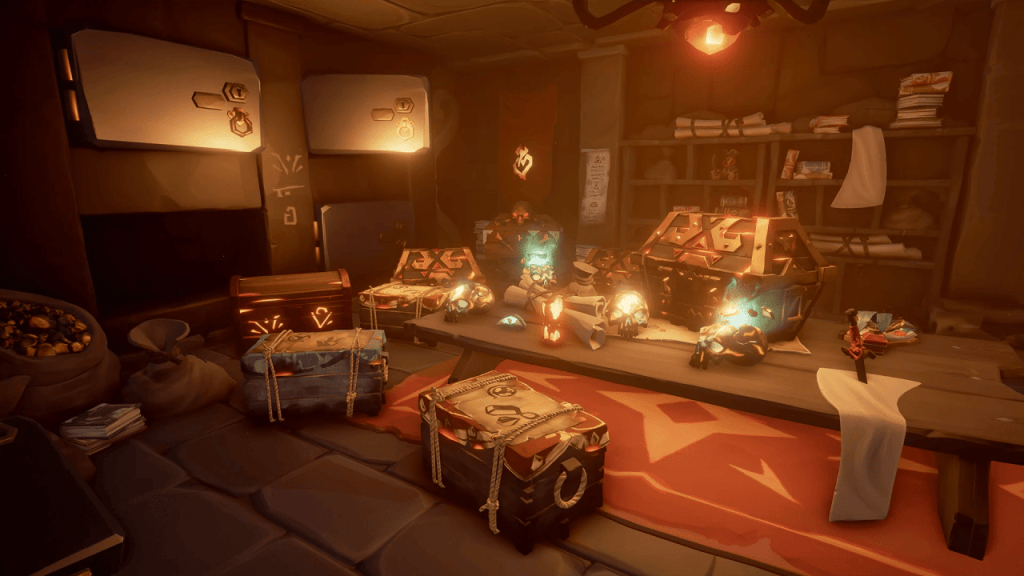
A Garrison vault room, with loot pools balanced for each company voyage type.
- Role: Game Designer
- Engine: Unreal Engine 4
- Platforms: Windows, Xbox Series X|S, Xbox One, Xbox Cloud Gaming, PlayStation 5
Project Description:
The Plunder Pass is Sea of Thieves’ premium seasonal battle pass, rewarding players as they earn XP throughout each season. In Season 20, it was reworked to give players more agency over the rewards they receive, while slimming down the overall number of levels and filler rewards compared to previous iterations. This also introduced the Star Prize, a standout reward with its own unique identity that awaits players at the final tier.
Alongside it, I’ve worked on the game’s reward economy: how much loot and gold players earn from different activities, and how the item economy holds together as new content is added. This has been an ongoing responsibility across seasons and between projects, balancing gold-per-hour, loot pools and their placement so they feel rewarding for all players.
Role Responsibilities:
- Set up and managed the Plunder Pass across Seasons 12–18
- Set up and iterated on the Season 20 Plunder Pass rework with content and UI teams, giving players more choice over rewards, slimming down levels and filler rewards, and introducing the Star Prize
- Created design documentation so other designers and teams could set up future seasons’ Plunder Passes
- Designed new challenges to drive XP progression and keep players engaged throughout each season
- Balanced Garrison loot pools for each company voyage type, including the Mega Stash, a rare chance at a much larger loot pool
- Balanced the loot pools for Sanctuaries in Act 1
- Documented the gold-per-hour value of each activity, and the overall XP earned from completing Garrisons and the Eternal Guard, in an easy-to-read format for the wider team
- Balanced the wider item economy so new content stayed rewarding without devaluing existing activities
- Used player data and feedback to tune reward rates after release

